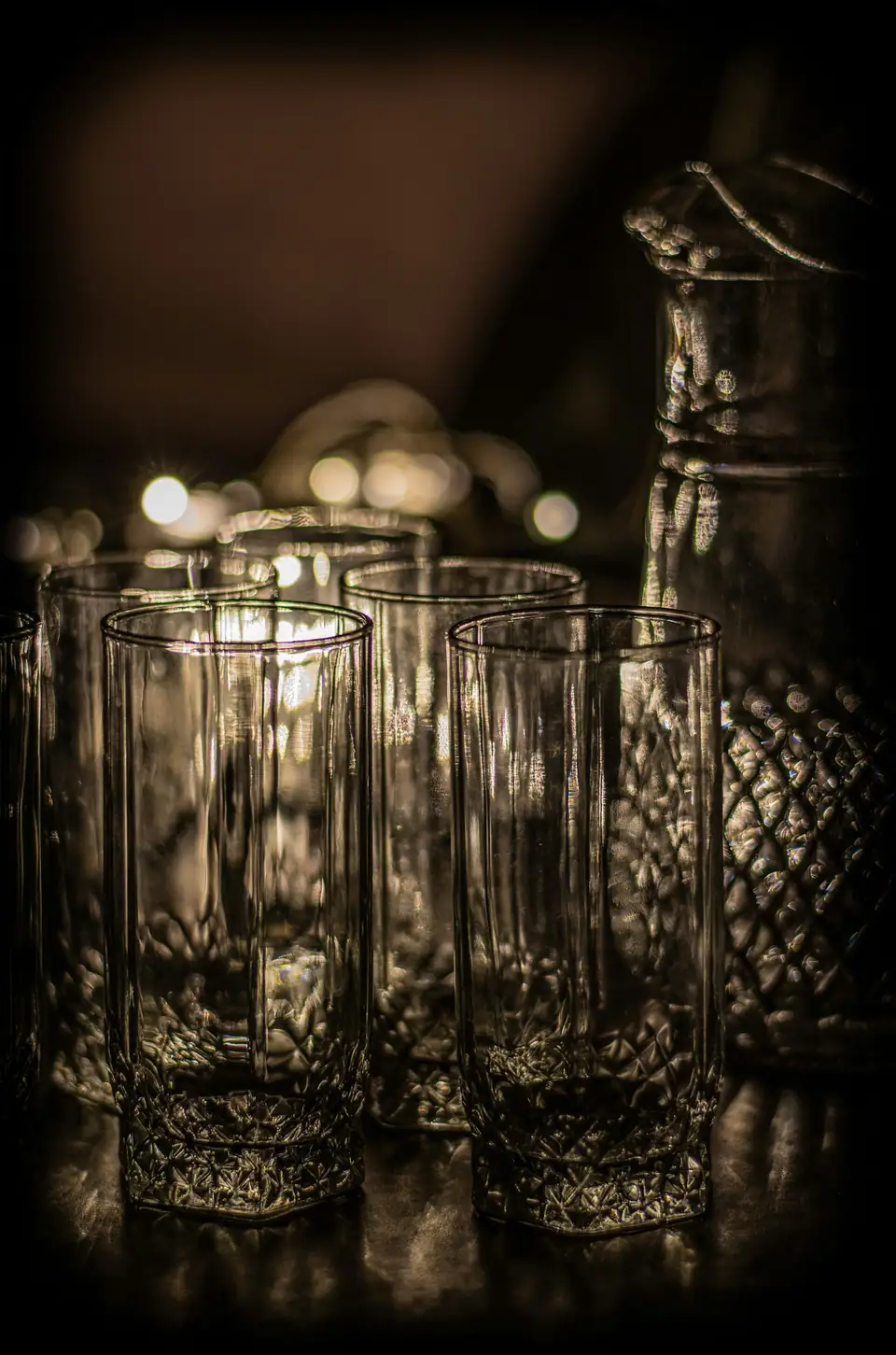
A vintage highball glass is a tall, straight tumbler for drinks with ice and a mixer, usually around 8 to 10 oz. The Collins glass is taller and slimmer, at about 12 to 14 oz. Mid-century American highballs are often printed, enameled or gold-decorated and sold in sets, some with a metal caddy, and decorated glass needs washing by hand.
This guide is part of our hub on vintage cocktail glasses.
How is a highball different from a Collins glass?
The two are easy to confuse in a listing photo. Difford’s Guide describes the highball as tall and narrow for its height, with straight or slightly flaring sides, at 6 to 10 oz, and recommends 8 oz as the optimal size. It calls the Collins, named after the Collins drink, a catch-all term for tall, slim, straight-sided glasses of 12 to 14 oz, and says not to confuse it with the slightly squatter, broader and smaller highball.
VinePair gives slightly larger figures: about 8 to 12 oz for a highball, made for two-ingredient drinks, and 10 to 14 oz for a Collins, used for drinks with more parts. Both agree on the main point: the Collins is the taller glass and holds more.
| Glass | Size (Difford’s Guide) | Size (VinePair) | Look |
|---|---|---|---|
| Highball | 6 to 10 oz, 8 oz ideal | 8 to 12 oz | Tall, slightly squatter |
| Collins | 12 to 14 oz | 10 to 14 oz | Taller and slimmer |
The name is older than most surviving glasses. The Online Etymology Dictionary dates “highball” to the 1890s and says it probably comes from ball, a drink of whiskey, with high for the tall glass, though the origin is not certain.
Vintage highball and Collins glasses
Live listings, shown by eBay
Opens eBay in a new tab. Check condition, seller feedback and returns.
What do decorated mid-century highball sets look like?
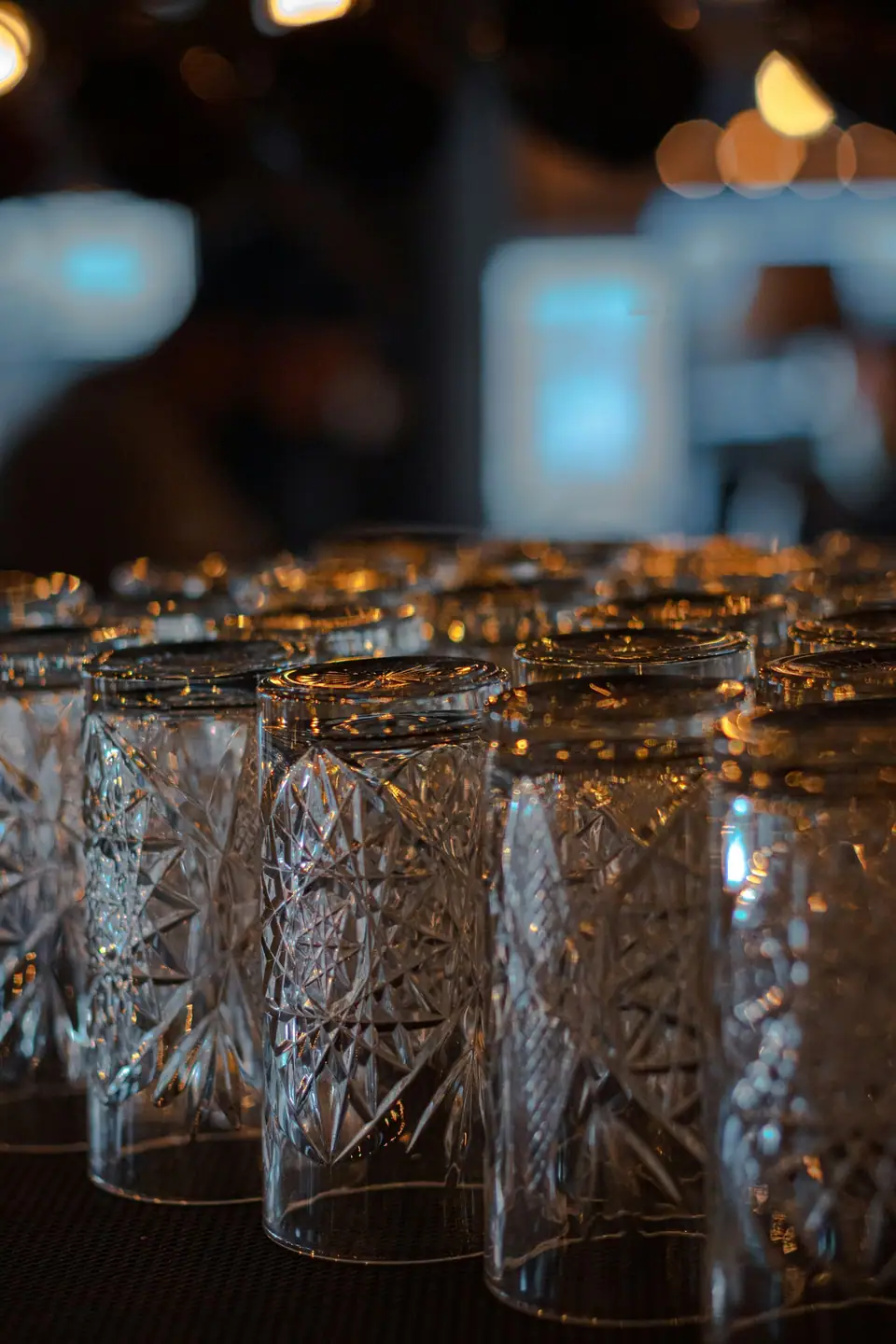
Many vintage tumblers came from big American glassworks. The West Virginia Encyclopedia describes Hazel-Atlas as the largest glass company in the United States from the 1930s until the 1950s, with the world’s largest tumbler factory in Clarksburg.
Some decorated sets came with a carrier. The Corning Museum of Glass holds a set of silver-decorated tumblers with a chrome-plated caddy from about 1950 to 1960, and the Toledo Museum of Art has eight tumblers with 22-karat gold leaves and a metal caddy, designed by Freda Diamond in the 1960s. A caddy in the same finish as the glasses suggests a set that has stayed together.
Designer names also appear on highballs. Culver, Georges Briard and Dorothy Thorpe all decorated tumblers; our guides to Culver barware, Georges Briard barware and mid-century barware designers explain how each marked its work.
Mid-century barware sets
Live listings, shown by eBay
Opens eBay in a new tab. Check condition, seller feedback and returns.
Are painted vintage glasses safe to use?
Treat painted decoration near the rim with care. Consumer Reports tested decorated drinking glasses and found that 13 of 14 pieces with painted decoration near the top rim released more lead than California considers safe, and five of 14 released more cadmium. California’s rules look at the area within 20 millimeters, about three-quarters of an inch, of the lip.
Industry has long watched the same zone. Glass Online reported in 1996 that the decorators’ trade body set a voluntary “lip and rim” standard covering the top 20 mm of a tumbler. A vintage glass made before or outside such standards carries no such assurance. In 2010 the U.S. Consumer Product Safety Commission announced a recall of movie-themed drinking glasses because the designs contained cadmium.
Safety
How do you wash decorated vintage highballs?
By hand, and gently. The Ohio History Connection advises against cleaning glass in a dishwasher, and says paint and gilding can easily chip or flake off, so it suggests spot cleaning around them with a cotton swab. Waterford’s care guide adds that dishwasher heat, friction and detergent can dull or scratch glass.
Store tall tumblers upright and apart, so rims do not knock together. Our guide to caring for vintage glassware covers cloudy glass and gold rims in more detail.
What to check before you buy
- Count and match. Confirm the number of glasses and that the pattern and gold color match across the set, including any caddy.
- Decoration wear. Look for thinning gold or missing paint at the rim, where lips and dishwashers do the damage.
- Size. Ask for the height and capacity, so you know whether you are buying highballs or Collins glasses.
For shorter glasses, see vintage whiskey glasses and decanters, and for colored tumblers, vintage colored glassware.
Questions collectors ask
What is the difference between a highball and a Collins glass?
Both are tall tumblers for drinks with ice. Difford's Guide describes the Collins as taller and slimmer, at about 12 to 14 oz, and the highball as slightly squatter and smaller, with 8 oz the most useful size.
Why is it called a highball?
Nobody is sure. The word appears in American English in the 1890s, and the Online Etymology Dictionary suggests it probably joins ball, an old word for a drink of whiskey, with high, because it is served in a tall glass.
Are painted vintage glasses safe to drink from?
Be cautious. Consumer Reports found that 13 of 14 glasses it tested with painted decoration near the rim released more lead than California considers safe. It advises keeping painted glassware away from young children and out of the dishwasher, and letting sentimental pieces be decorative.
Can vintage gold-rim highballs go in the dishwasher?
No. The Ohio History Connection advises against dishwashers for glass and says paint and gilding can easily chip or flake off, so wash decorated glasses by hand. Sets such as Culver highball glasses show how worn gold looks in photos.
Sources
- Cocktail Glassware Guide: Chilling, Types and SizesDifford's Guide
- 8 Iconic Cocktails With Their Own Dedicated GlasswareVinePair
- highballOnline Etymology Dictionary
- Hazel-Atlas Glass Companye-WV: The West Virginia Encyclopedia
- Caddy (tumblers with chrome-plated caddy, about 1950 to 1960)Corning Museum of Glass
- Beverage Tumblers with Golden Foliage Pattern and CaddyToledo Museum of Art
- Historic Housekeeping: Glass and CeramicsOhio History Connection
- Care GuideWaterford
- How Safe Is That Painted Drinking Glass?Consumer Reports
- Lip and rim standard for decorated glasswareGlass Online
- McDonald's Recalls Movie Themed Drinking Glasses Due to Potential Cadmium RiskU.S. Consumer Product Safety Commission
From our guide to Vintage Cocktail Glasses: Coupes, Nick and Nora, Martini and Rocks.