We may earn a commission when you buy through links on this page. Listings and prices come from our partners and change often. Learn more.
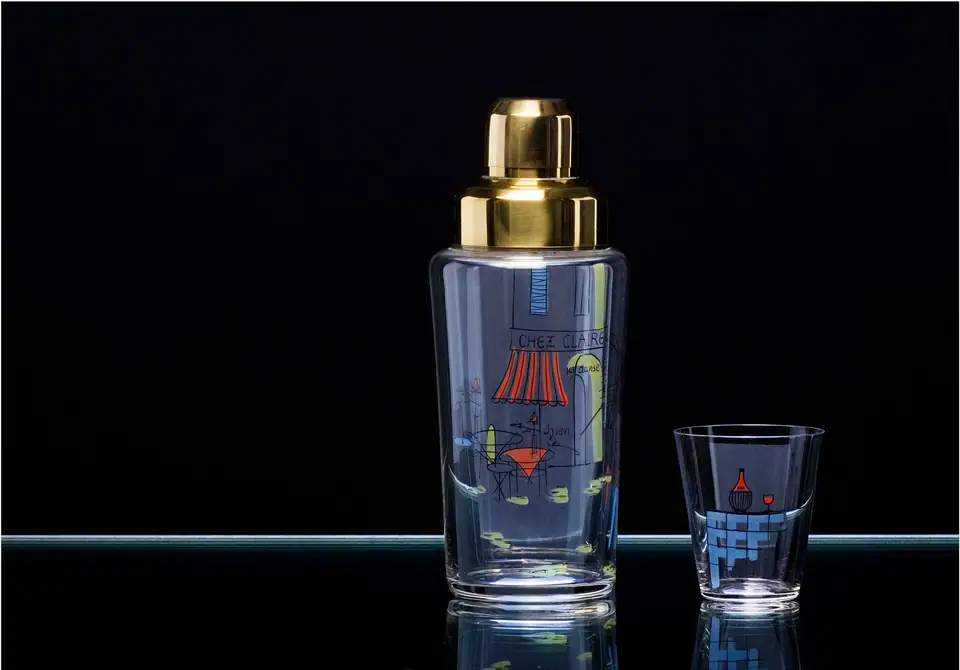
There are three cocktail shaker styles. A cobbler has three pieces: a tin, a built-in strainer and a cap. A Boston shaker pairs a metal tin with a smaller glass or tin and needs a separate strainer. A Parisian, or French, shaker is two metal pieces. Collectors value vintage shakers for maker, material and design.
That split matters for buyers. The questions a bartender asks (speed, capacity, seal) differ from a collector’s questions about marks, plating and completeness. This guide covers both.
What are the three types of cocktail shaker?
| Style | Pieces | Strainer | What sources say |
|---|---|---|---|
| Cobbler | Three: tin, strainer top, cap | Built in | The cap can double as a jigger. Difford’s dates the first US cobbler-style patent to 1872. |
| Boston | Two: large metal tin, smaller glass or tin | Separate | Named by Difford’s for sets with a glass half. |
| Parisian (French) | Two, both metal: base and cap | Separate | A metal bottom and a metal cap; a strainer is always required. |
Naming is not fully settled. Difford’s Guide uses “French shaker” for any two-piece set in which both halves are metal, which bartenders also call tin-on-tin. Wikipedia describes the French or Parisian shaker as a metal bottom and a metal cap, used with a separate strainer, and Cocktail Society describes it as two stainless steel parts.
What is a Boston shaker?
A Boston shaker is two flat-bottomed cones, one larger than the other. The large one is a metal tin. Difford’s says the smaller one can be glass, stainless steel or even plastic, and that the set is called a Boston shaker when that smaller cone is glass.
A Bar Above describes the two halves fitting together to create a tight seal. Because there is no built-in strainer, the drink is poured through a separate one.
Why do bartenders prefer Boston shakers?
A Bar Above, a bartending resource site, gives four reasons professionals favor the Boston:
- Capacity. It often holds more than one drink.
- Speed. Once mastered, it opens and pours quickly.
- Simple cleaning. Two pieces, no small strainer holes.
- Control. A separate strainer lets the bartender choose how finely to strain.
The same source lists the cobbler’s drawbacks for service: lids that can freeze shut when chilled, built-in strainers that clog with muddled fruit, and smaller capacity. Difford’s adds that three-piece shakers pour more slowly than two-piece ones, especially with muddled fruit pulp.
What shakers do professional bartenders use?
Sources point to two-piece shakers, either the Boston or an all-metal tin-on-tin set. Difford’s Guide recommends tin-on-tin shakers, noting they need only a short period of practice. Cocktail Society’s Timo Torner calls tin-on-tin his favorite style and recommends it to professionals for its durability, easy cleaning and seal, pointing to the fragility of a glass Boston half.
The cobbler still has professional users. Difford’s notes that Japanese bartenders and practitioners of the “hard shake” tend to prefer three-piece shakers, because the smaller capacity limits how far ice and liquid travel inside.
Which vintage shakers do collectors look for?
For collectors, material and design come first. Three groups are well documented in museum, auction and hallmarking sources.
Sterling silver and silver plate
A shaker’s marks tell you whether it is solid silver or plate. Sterling carries “Sterling” or “925” on American pieces, or a full hallmark on British ones. Plate carries marks such as EPNS or “Silver Plate,” or just a maker’s name. Our guide to sterling vs silver plate hallmarks shows how to read them.
Check every part. The body, lid and strainer of a cobbler can each carry marks, and a replacement cap or strainer may not match the body.
Vintage sterling and silver-plate shakers
Browse current vintage silver cocktail shakers on eBay, pre-owned pieces, from $150.
Shop vintage silver cocktail shakersOpens eBay in a new tab. Check condition, seller feedback and returns on the listing.
Art Deco and streamline designs
The 1930s produced some of the most collected shakers. The Art Deco Society of New York describes Norman Bel Geddes’s chrome-plated cocktail set for Revere Copper and Brass. It first appeared in Revere’s catalog in 1936 and was renamed “Manhattan” in 1938. Its tall ribbed shaker, stemmed cups and stepped tray evoke a city skyline.
Novelty and figural shakers
Wikipedia’s history of the shaker notes that designs of the 1920s and 1930s took many shapes, including penguins, zeppelins, lighthouses and airplanes. The best documented is Napier’s penguin. Sotheby’s catalogs it as silver plate, designed by Emil Schuelke for The Napier Co. of Meriden, Connecticut, with a design patent filed on August 22, 1936 and approved on October 13, 1936.
Both of these famous designs are plated rather than sterling, so read the marks before you judge value.
How do you check a vintage shaker before buying?
- Read the marks on the base, lid and strainer. Ask for close photos of each.
- Check the plating. On plate or chrome, look for worn patches where a different metal shows through, especially on edges and high points.
- Test the fit. Ask whether the cap and strainer seat firmly. A loose cap may be a replacement.
- Look inside. Ask about dents, corrosion and residue in the tin and strainer holes.
- Confirm completeness. For sets, count the cups and check the tray matches.
We do not publish shaker prices because asking prices vary widely. Maker, material, design, completeness and condition drive value.
Vintage cocktail shakers listed now
Browse current vintage cocktail shakers on eBay, pre-owned pieces, from $50.
Shop vintage cocktail shakersOpens eBay in a new tab. Check condition, seller feedback and returns on the listing.
Related guides
Shakers belong with the rest of the bar; our guide to collecting vintage crystal decanters covers the decanter table. To pour what you shake, see vintage cocktail glasses by type. Before you bid, read how to buy vintage barware on eBay safely.
Questions collectors ask
What is a Boston shaker?
A Boston shaker is a two-piece shaker: a large metal tin and a smaller cup that fits inside it at an angle to form a seal. Difford's Guide uses the name when the smaller piece is glass. It has no built-in strainer, so you pour through a separate one.
Why do bartenders prefer Boston shakers?
A Bar Above cites generous capacity, speed once mastered, a simple two-piece build that is easy to clean, and more control from a separate strainer. Cobbler lids, by contrast, can stick when chilled and their built-in strainers can clog.
What shakers do professional bartenders use?
Sources point to two-piece shakers, either a Boston with a glass half or an all-metal tin-on-tin set, which Difford's Guide and Cocktail Society both recommend. Difford's notes that Japanese bartenders and hard-shake practitioners often prefer the three-piece cobbler.
What is a Parisian or French shaker?
A two-piece all-metal shaker: a metal bottom and a metal cap, with no built-in strainer. Naming varies, and Difford's Guide uses "French shaker" for any two-piece set in which both halves are metal.
Are vintage cocktail shakers sterling silver?
Not always. Shakers were made in sterling, silver plate and chrome. The Napier penguin shaker, for example, is silver plate, and the Revere Manhattan set is chrome plated. Read the marks on the body, lid and strainer to find out.
Sources
- How to shake a cocktail and types of cocktail shakerDifford's Guide
- Boston Shaker Vs Cobbler Shaker: Cocktail Shakers ExplainedA Bar Above
- Different Types of Cocktail Shakers: From Boston to ParisianCocktail Society
- Cocktail shakerWikipedia
- An American Silver-plated Penguin-form Cocktail ShakerSotheby's
- Manhattan Cocktail SetArt Deco Society of New York
From our guide to Collecting Vintage Crystal Decanters: A Buyer's Guide.