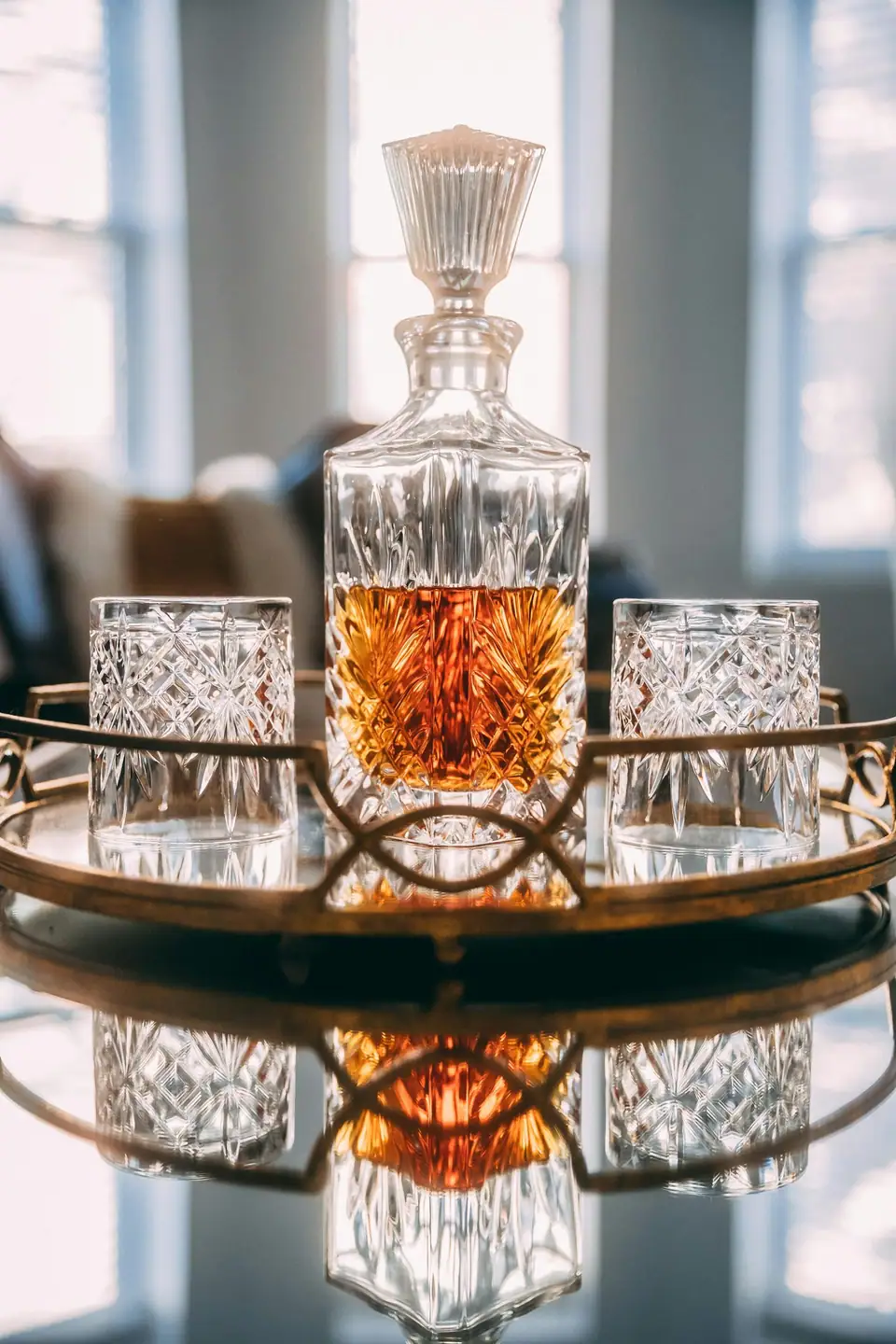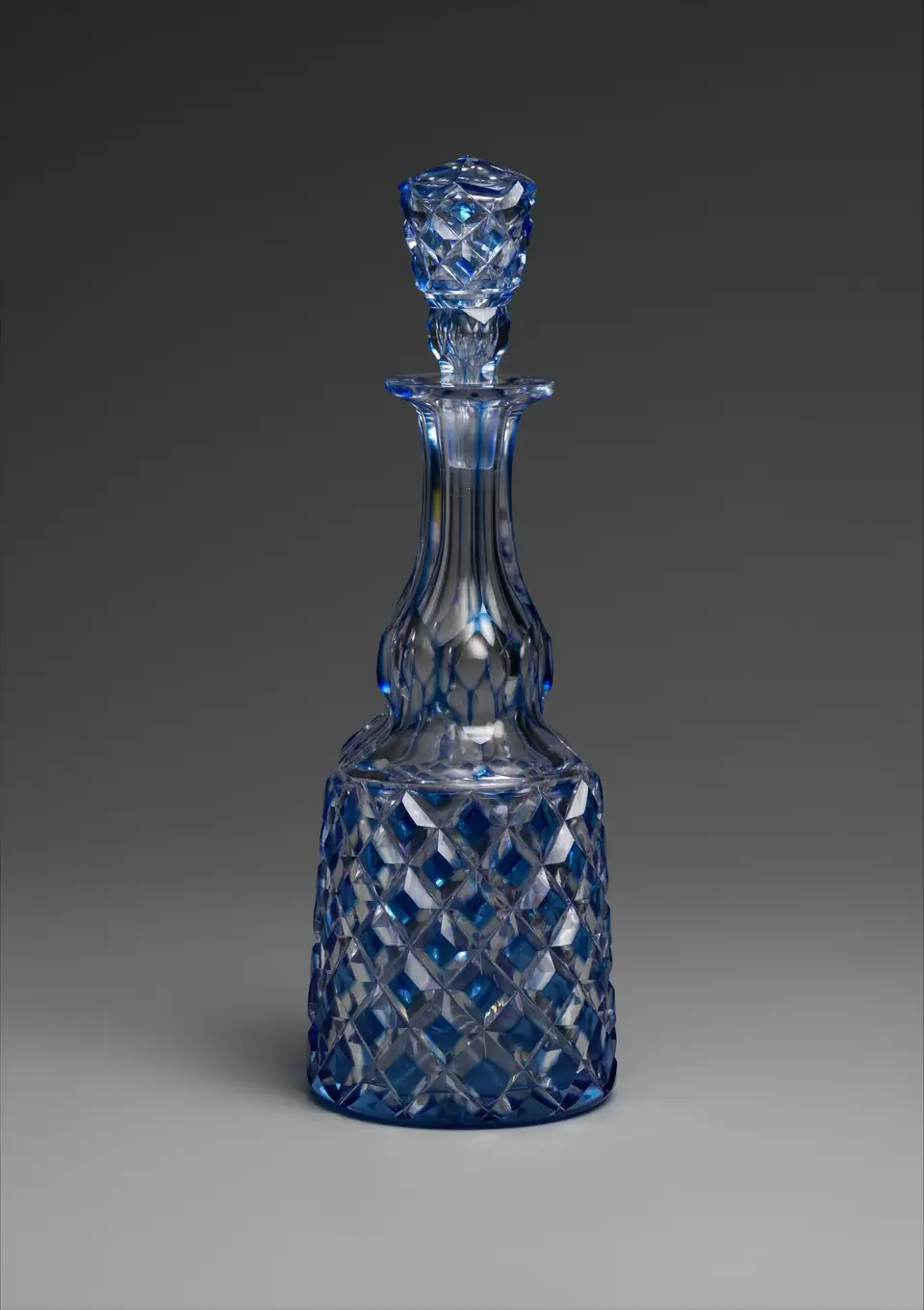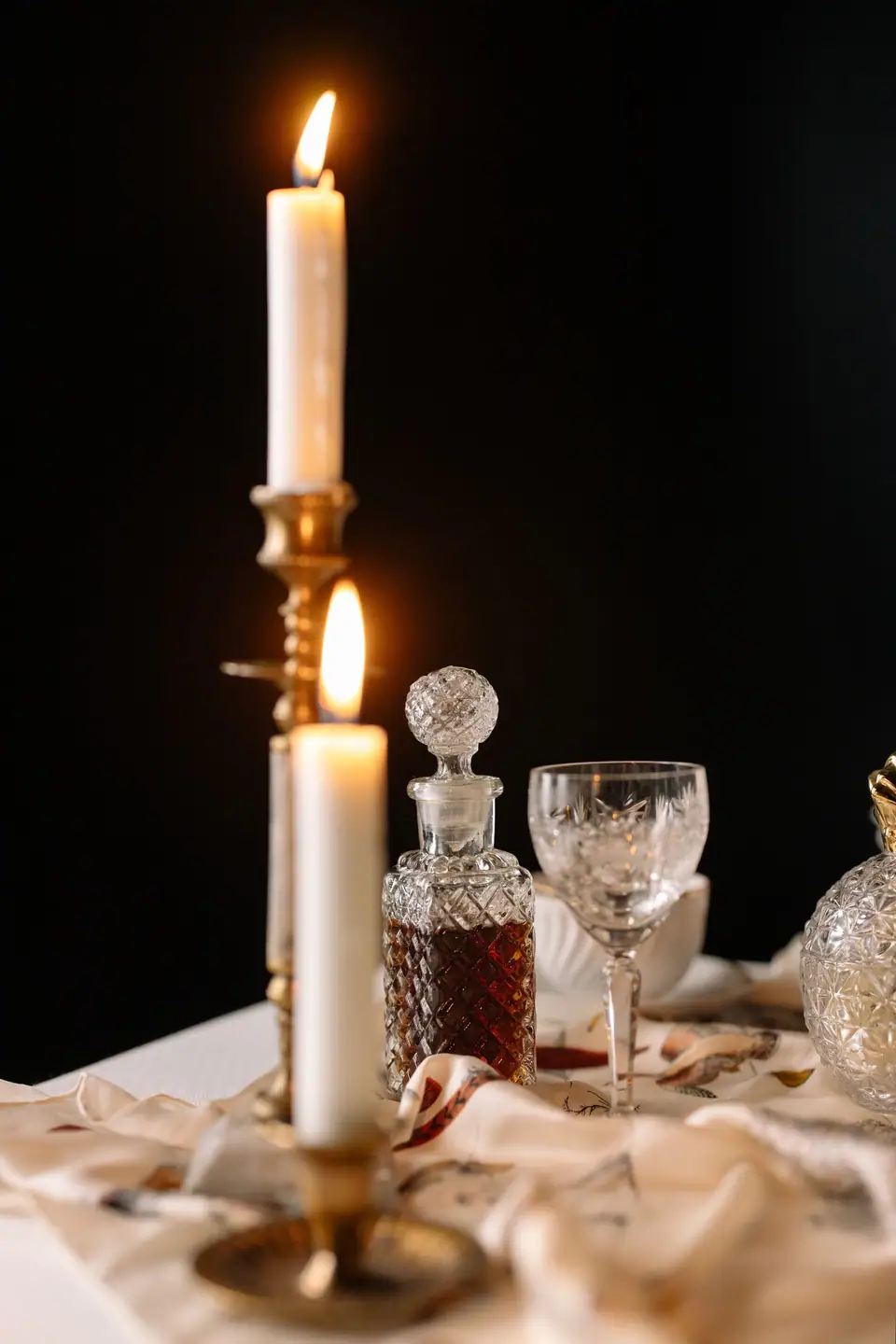
A wine decanter serves one bottle at a meal: it is usually sized for a single bottle, sometimes a magnum, with a loose stopper or none. A spirit decanter sits on a sideboard, so it is often upright or square, with a fitted stopper. The shape, the stopper and any label tell you which you have.
This guide explains the difference, then the special shapes collectors meet: the ship’s decanter, the claret jug and the labeled spirit decanter. It is part of our guide to collecting vintage crystal decanters.
What is a wine decanter for?
Wine Spectator says decanting serves two purposes: to separate an aged wine from any sediment that may have formed, and to aerate a young wine so its aromas and flavors show more. It adds that decanters typically come in single-bottle and magnum sizes.
The first English decanters were serving vessels. The Victoria and Albert Museum’s decanter jug from the Savoy Glasshouse in London, made between 1680 and 1685, is one example. The museum notes that early decanters had no ground stoppers, because they were meant for serving wine, not storing it.
That is still the rule at the table. Wine Spectator notes that oxidation affects wine over hours and days, so a decanter of wine is filled for one meal, then emptied and washed. A spirit decanter, by contrast, is filled to serve and then stands with its stopper in place.
Vintage crystal decanters, wine and spirit
Live listings, shown by eBay
Opens eBay in a new tab. Check condition, seller feedback and returns.
How do you tell a wine decanter from a spirit decanter?
| Feature | Wine decanter | Spirit decanter |
|---|---|---|
| Shape | Varies: jug, shouldered and globe forms | Often upright, square or heavily cut |
| Stopper | Loose, hollow or none | Ground to fit the neck, part of the set |
| Label | Rarely | Sometimes a gilt or engraved spirit name, or a hanging silver ticket |
| Usual setting | On the table for one meal | On a sideboard, a tray or in a tantalus |
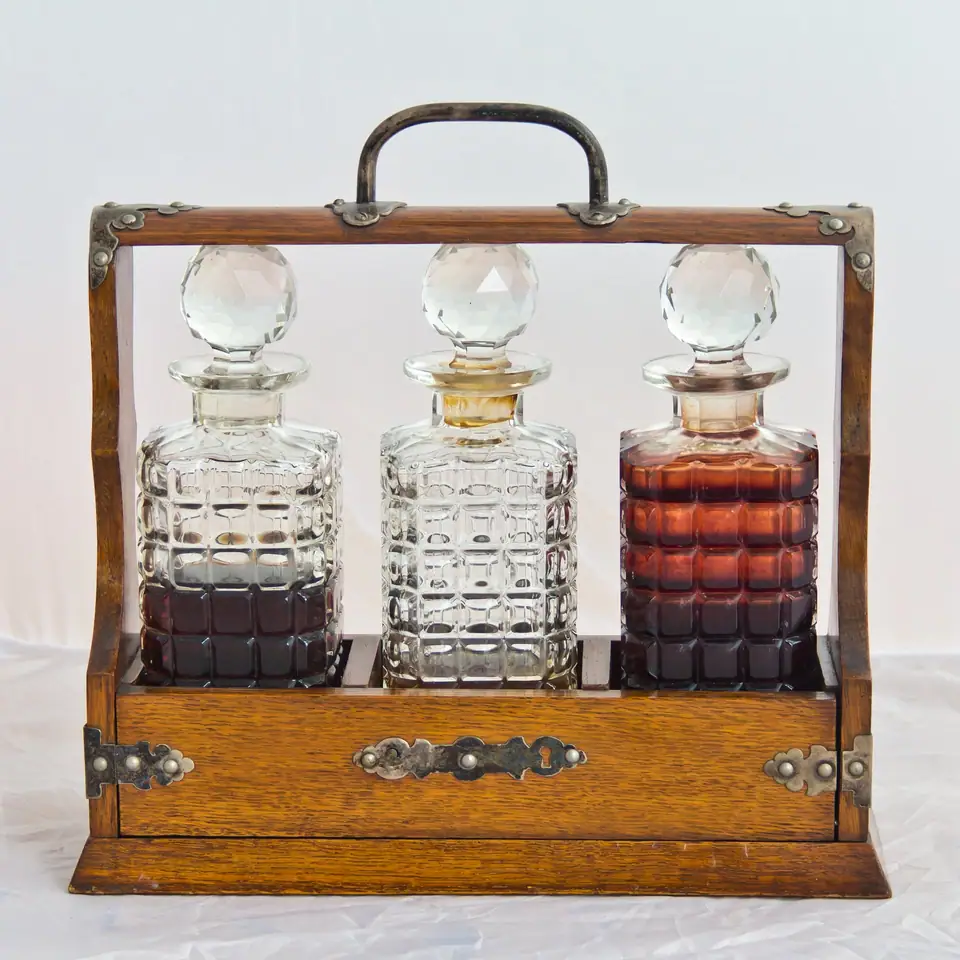
Square bottles are the clearest spirit sign. The V&A’s spirits stand in Sheffield plate, from about 1820 to 1830, holds four square bottles with a wide band of diamond cutting and mushroom-shaped stoppers. Square decanters with matching cut stoppers turn up most often in spirit stands and tantalus sets like this one, where the flat sides let several bottles stand together.
Labels on spirit decanters
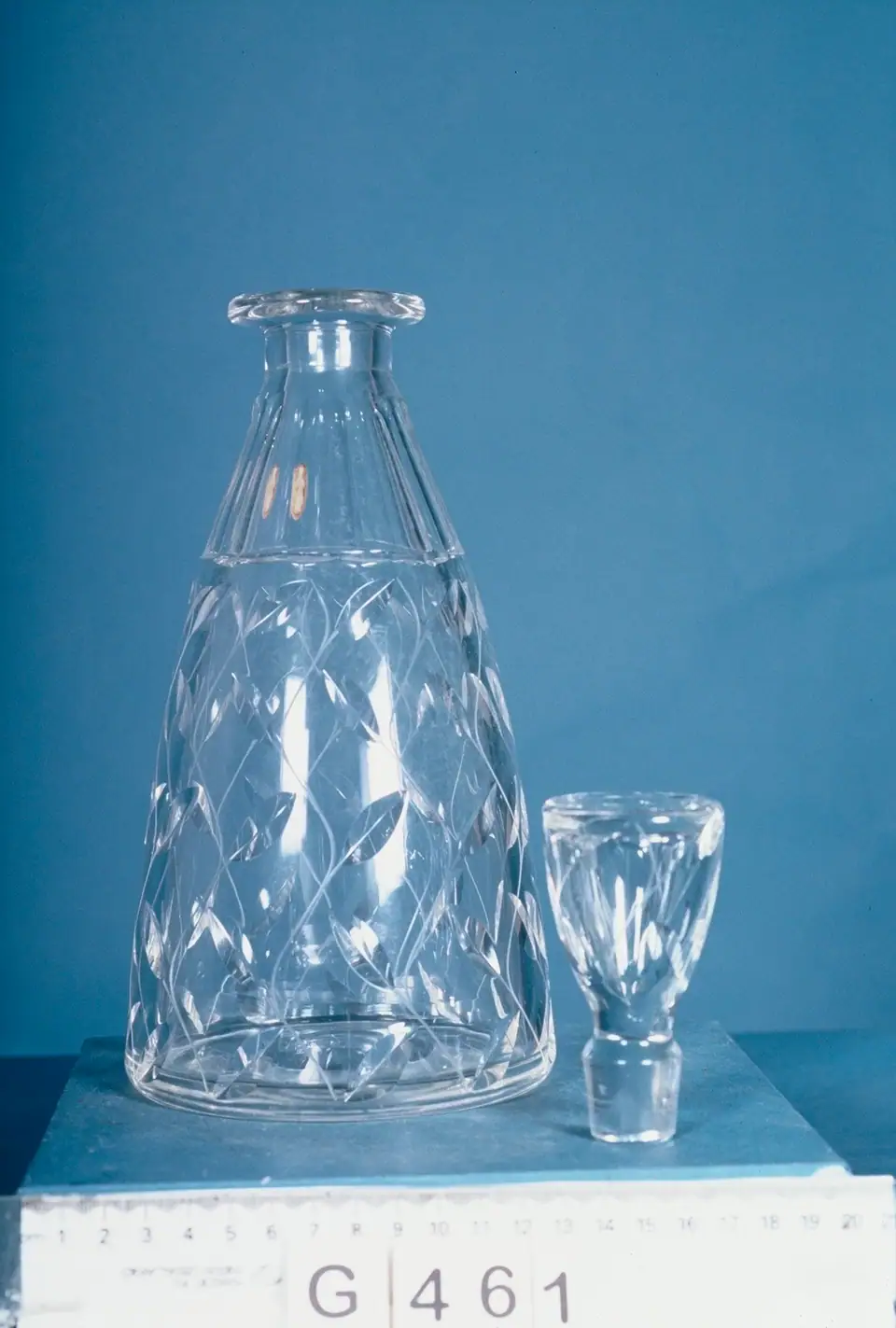
Some spirit decanters name their contents. The V&A holds a green Bristol glass decanter from about 1790 to 1800 gilded with the word “Hollands”, the Dutch gin, and Antique Collecting magazine describes small colored decanters with gilded labels for brandy, Hollands and rum. A gilt label is strong evidence that a decanter held spirits.
Others wore a silver label on a chain. The V&A explains that “labels for bottles” are mentioned from the 1770s, and that by the 1790s they were established as wine or decanter labels. Silver bottle tickets now turn up for sale on their own as well as with decanters.
What is a ship’s decanter?
A ship’s decanter has a very wide, flat base and a short neck. The Science Museum Group describes the shape, sometimes called a “Rodney” after Admiral Rodney, as emerging toward the end of the 18th century, with its great base ensuring stability at sea.
The form stayed in production: the Science Museum Group’s own example was made by the English glassmaker Stevens & Williams in the 20th century. A “ship’s decanter” in a listing can be Georgian or modern. Date it by the glass, the cutting and any maker’s mark, not by the shape.
What is a claret jug?
A claret jug is a wine serving vessel with a handle and a pouring lip. Bonhams notes that the first silver-mounted glass claret jugs appeared in London in the 1830s; the V&A’s example by Mortimer and Hunt, from 1839 to 1840, has silver-gilt vine mounts and a vine handle.
For a silver-mounted jug, the hallmarks on the mount date it. Our guide to sterling vs silver plate hallmarks explains how to read them.
Antique claret jugs
Live listings, shown by eBay
Opens eBay in a new tab. Check condition, seller feedback and returns.
Can you store spirits in a crystal decanter?
Not in lead crystal. McGill University’s Office for Science and Society says there is no problem serving drinks from lead crystal decanters, but they should not be stored in them for any period of time. British Glass cites a 1991 study in The Lancet that found drinks stored in lead crystal decanters steadily increase in lead concentration.
So display a vintage spirit decanter empty, fill it when you serve, and keep the bottle for storage. Our guide to storing spirits in a lead crystal decanter covers the official guidance, and caring for vintage glassware explains how to clean a decanter without scratching it.
Buying either kind
- Stopper fit. On a spirit decanter, the stopper should seat firmly and match the cutting. On a wine decanter, check the inside of the wide base for haze that does not wipe away.
- Sets. Square spirit decanters were often made as sets for a stand, like the V&A example above; a single one may be from a broken tantalus.
- Matching glasses. Decanters sold with tumblers are covered in vintage whiskey glasses and decanters.
Decanter and glasses sets
Live listings, shown by eBay
Opens eBay in a new tab. Check condition, seller feedback and returns.
Questions collectors ask
Can you put spirits in a wine decanter?
You can serve from it, but a wine decanter without a fitted stopper lets the contents meet the air. For lead crystal, McGill University's Office for Science and Society says spirits can be served from a decanter but should not be stored in it for any period.
What is a ship's decanter?
A decanter with a very broad, flat base. The Science Museum Group says the shape, sometimes called a Rodney after Admiral Rodney, emerged toward the end of the 18th century, its great base ensuring stability at sea. Listings often call it a ship's decanter.
Is a claret jug a decanter?
It does the same job for wine, served at the table, but has a handle and a lip like a jug. Silver-mounted glass claret jugs first appeared in London in the 1830s, according to Bonhams.
How long can wine stay in a decanter?
Not as long as spirits. Wine Spectator notes that the effects of oxidation on wine happen over hours and days, so a decanter of wine is for one meal, then emptied and washed.
Sources
- Decanting Wine 101Wine Spectator
- What actually happens to wine once you decant it?Wine Spectator
- Decanter jug, Savoy Glasshouse, 1680 to 1685 (C.580-1925)Victoria and Albert Museum
- Decanter and stopper, England, 1740 to 1750 (C.4&A-1955)Victoria and Albert Museum
- Spirits stand, Sheffield plate, about 1820 to 1830 (M.481-1926)Victoria and Albert Museum
- Decanter and stopper, Bristol, about 1790 to 1800 (C.494:1, 2-1922)Victoria and Albert Museum
- Expert Guide to Buying Antique Glass DecantersAntique Collecting
- Ship's decanter and stopperScience Museum Group
- Claret jug, Mortimer and Hunt, London, 1839 to 1840 (M.19A-1963)Victoria and Albert Museum
- Two impressive early Victorian silver-mounted claret jugs, Paul Storr, London 1838Bonhams
- Bottle ticket, England, about 1790 (M.474-1944)Victoria and Albert Museum
- Alcohol should not be stored in leaded crystal decantersMcGill University Office for Science and Society
- Use of lead crystal for long-term storageBritish Glass
From our guide to Collecting Vintage Crystal Decanters: A Buyer's Guide.