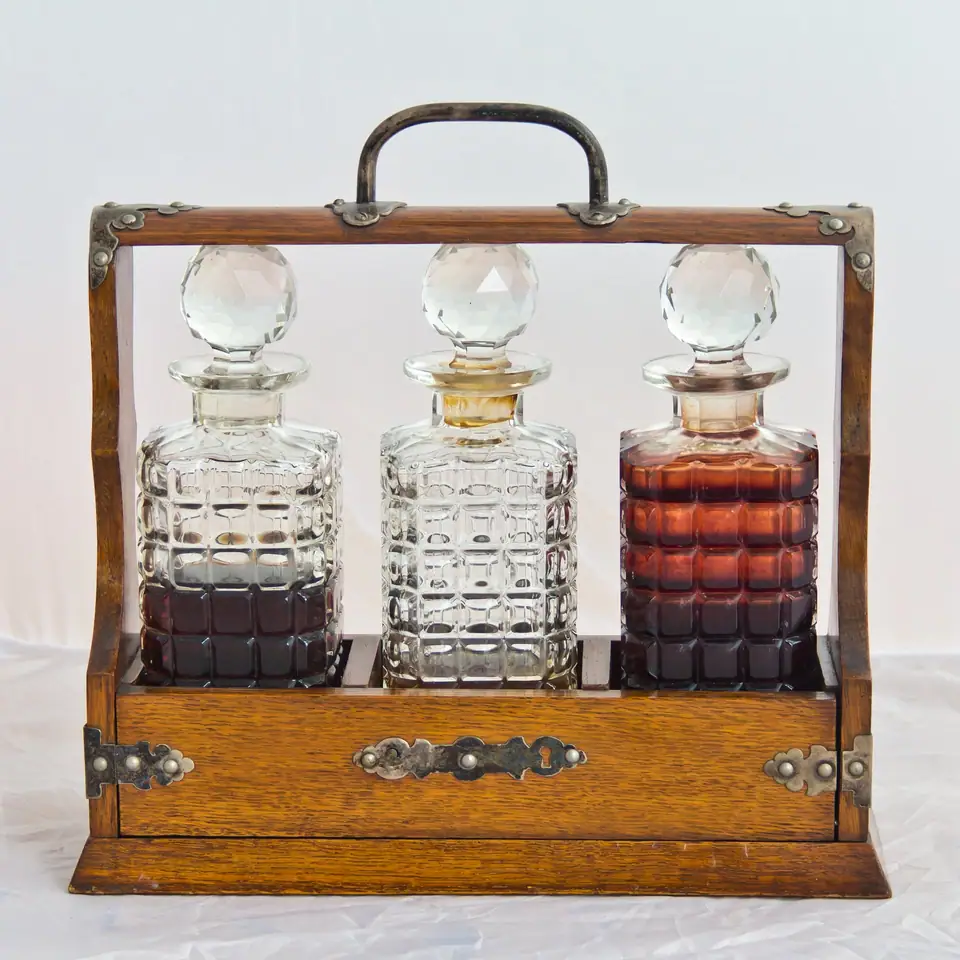
A tantalus is a small wooden cabinet that locks a set of cut-glass spirit decanters on display, so they cannot be lifted out without the key. The British Antique Dealers’ Association (BADA) calls it a late Victorian creation. Before buying, check the lock and key, the decanters and stoppers, and the wood.
This guide is part of our guide to collecting vintage crystal decanters. For the decanters themselves, see wine vs spirit decanters.
What is a tantalus for?
BADA describes the tantalus as a small cabinet for a set of cut-glass spirit decanters, usually built from woods such as mahogany, walnut and coromandel. Its distinguishing feature is the lock, which BADA says was installed to protect the spirits from the temptations of servants or younger members of the family.
The name is a joke at the drinker’s expense. Tantalus, in Greek myth, was punished by the gods and made to stand in a pool of water beneath a fruit tree, always within sight of what he could not reach.
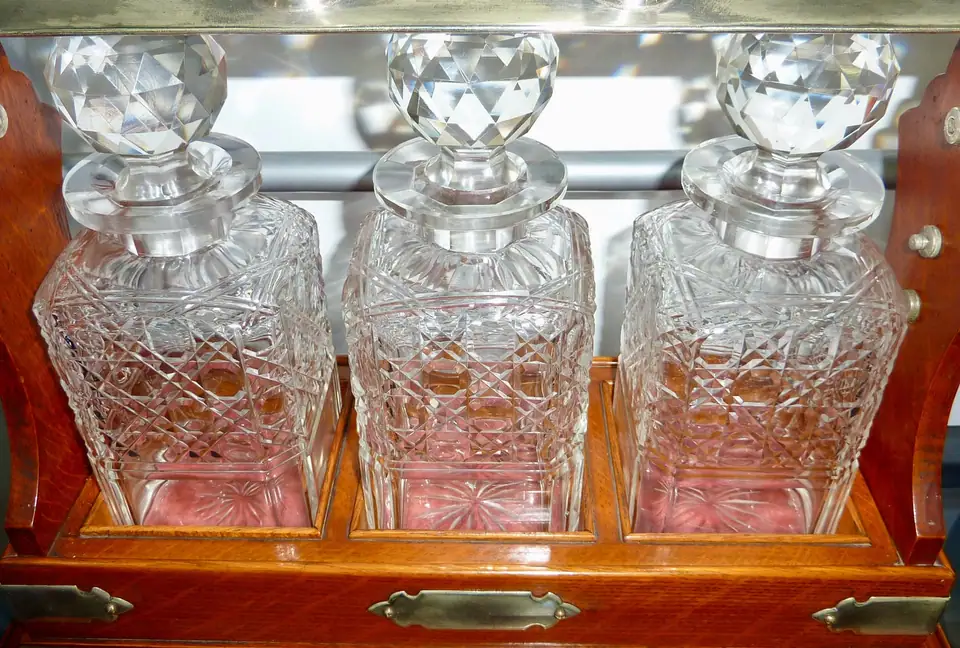
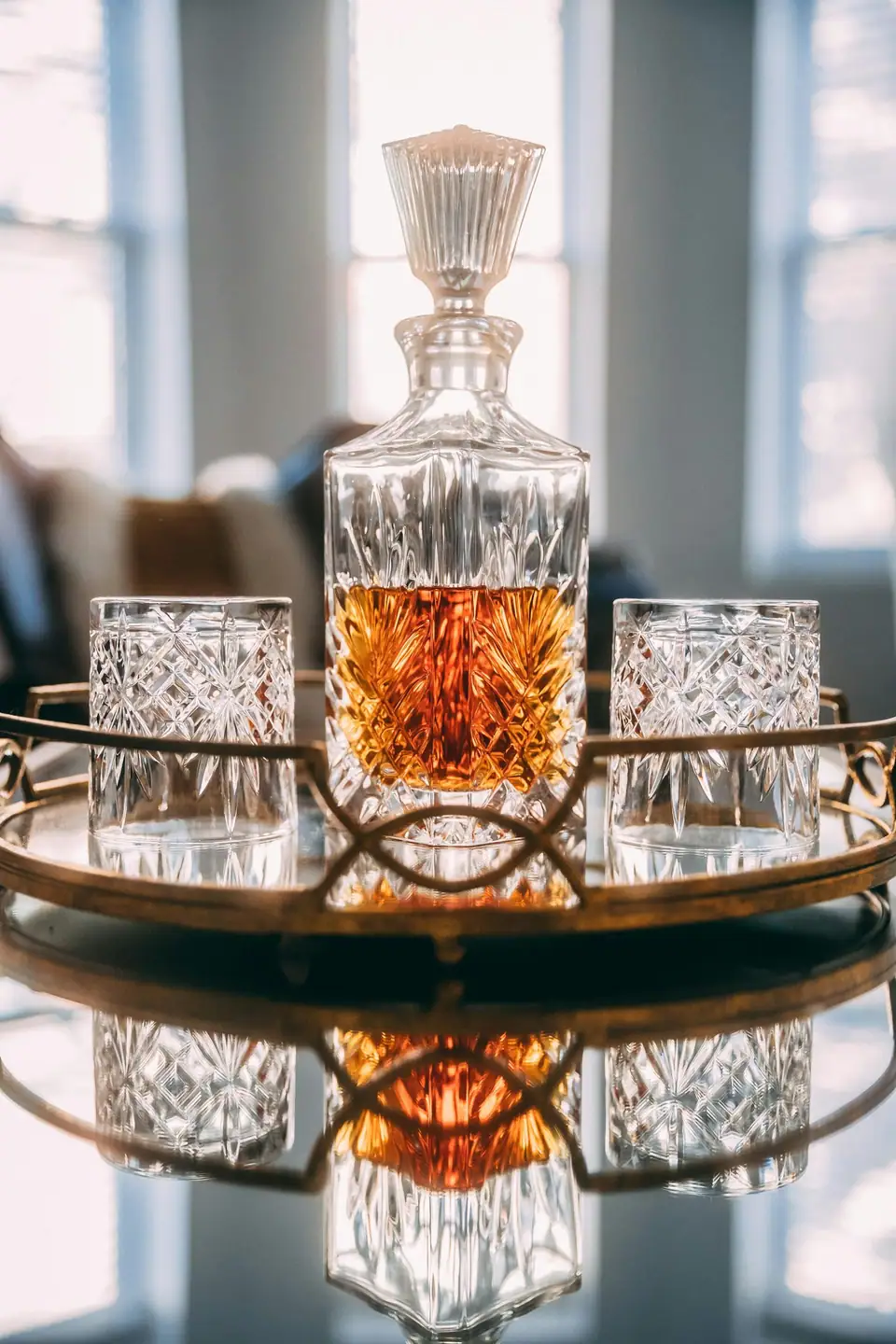
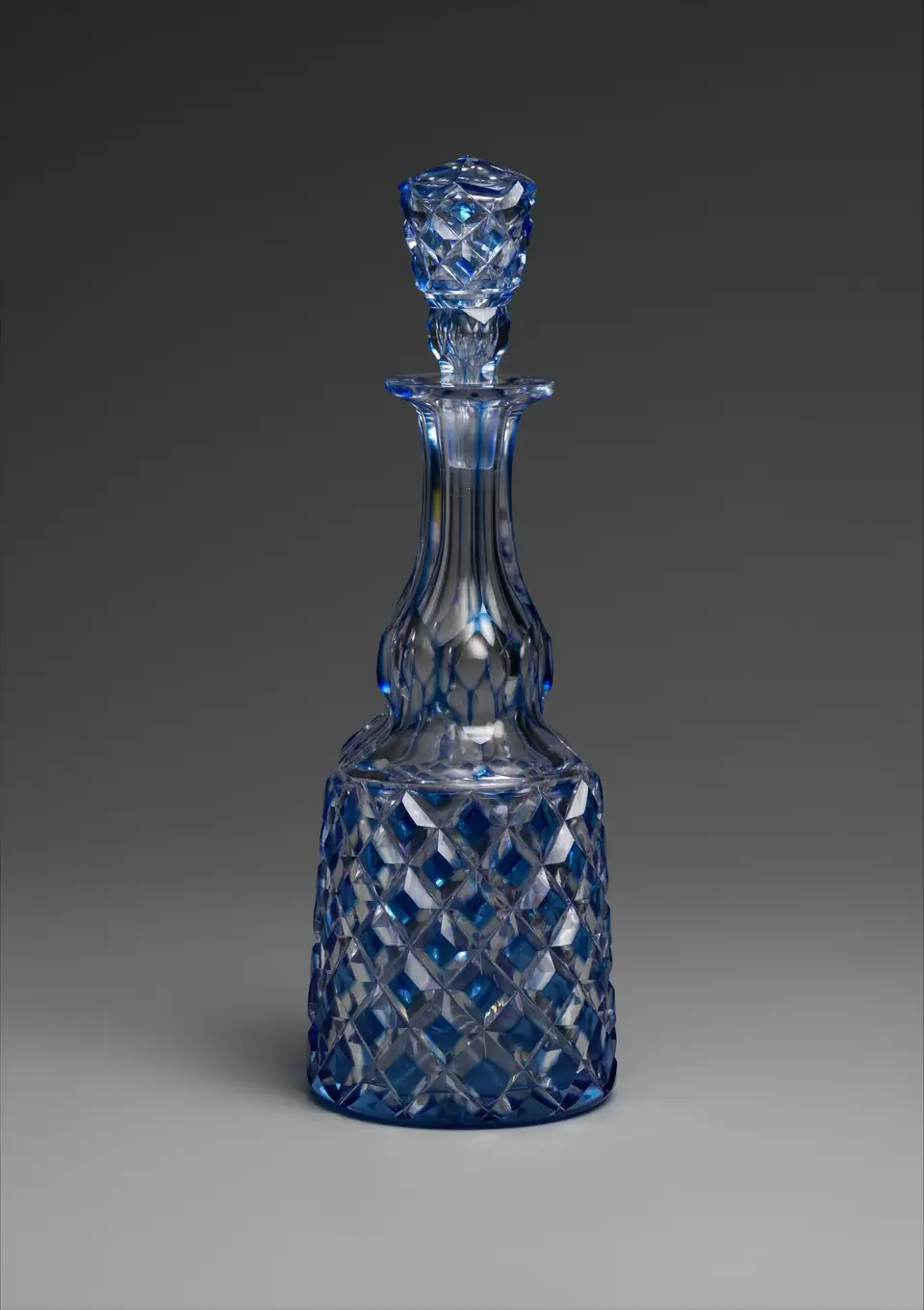
The decanters are the reason the frame exists. In many sets they are square, so they stand side by side, and their stoppers sit under the bar that the key releases. The Victoria and Albert Museum holds a “brilliant” cut glass decanter from about 1895 that it describes as probably from a set made for a tantalus.
Who made the best tantalus sets?
BADA says the tantalus was first patented in England by the cabinet maker John Betjemann in 1879, and that surviving models by the firm of Betjemann and Sons remain among the most sought after. Some dealers give a later patent year and a different family member, so a listing’s patent date is worth checking against the mark on the piece rather than taken on trust.
The idea of locking spirits away is older than the patent. The V&A holds a spirit case from 1855 to 1865, in papier-mache and mother of pearl, with a stand for decanters and glasses and its own key. So a lockable case is not automatically a Betjemann.
As the tantalus caught on, BADA notes, many variants followed, with silver a particularly popular material, including cabinets with a drawer for cards or a cribbage board.
Antique tantalus decanter sets
Live listings, shown by eBay
Opens eBay in a new tab. Check condition, seller feedback and returns.
What should you check before buying a tantalus?
- The lock and key. Ask whether the key is present and the lock works. Hemswell Antique Centres, a dealer group, calls finding an example with the original key and a working lock a true delight for a collector.
- Original, matching decanters. Every decanter should match in cutting and size, and each should fit its slot. Later replacement decanters are common, and Hemswell says the decanters should be original and match.
- Stoppers. Original stoppers match the decanter cutting and sit under the bar. Ask for a photo with the bar closed.
- Wood and mounts. Check for splits, loose hinges and missing escutcheons. Silver mounts carry hallmarks; our silver hallmarks guide shows how to tell sterling from plate.
- Glass condition. Chips at the stopper and neck are the usual damage. Haze inside that does not wipe away may be permanent etching; see caring for vintage glassware.
Coasters and bottle tickets: the decanter table
A tantalus kept spirits on the sideboard; wine decanters traveled around the table on coasters. The V&A explains that by the 1750s coasters were popular drinking accessories that let guests slide decanters or wine bottles across the table without scratching it, and caught drips that might stain the wood. Coasters had baize-covered or polished wooden bases, and later versions sometimes had wheels.
Decanters were also labeled. The V&A notes that “labels for bottles” are mentioned in the 1770s and were established as wine or decanter labels by the 1790s, hung on a chain around the neck. Coasters and bottle tickets come in both sterling and silver plate, so check the marks.
Antique wine and decanter coasters
Live listings, shown by eBay
Opens eBay in a new tab. Check condition, seller feedback and returns.
Using a tantalus today
A tantalus is a display piece first. Treat the decanters in an antique set as lead crystal unless you know otherwise: Health Canada advises using lead crystalware only to serve drinks, never to store them. Keep the decanters empty, or fill one for an evening and empty it afterward. Our guide to storing spirits in a lead crystal decanter explains why.
For a whole mid-century bar around a cabinet like this, see mid-century home bar setup, and for gift ideas, vintage barware gifts.
Questions collectors ask
Why is it called a tantalus?
After Tantalus of Greek myth, who was punished by being made to stand in a pool of water beneath a fruit tree he could never reach. The decanters stay in view but locked away, so the name fits.
Who invented the tantalus?
The British Antique Dealers' Association says the tantalus was first patented in England by the cabinet maker John Betjemann in 1879. Some dealers give a later date and a different first name, so treat the year as approximate. Lockable spirit cases existed earlier.
Is a tantalus without its key worth buying?
It can be, if the price reflects it. A missing key or a lock that does not work is one of the first things to check. Ask the seller to say which, if any, parts are later replacements.
Can I store whisky in an antique tantalus?
Display it empty or fill it only when serving. Treat antique cut glass decanters as lead crystal unless you know otherwise: Health Canada advises using lead crystalware only to serve drinks, never to store them.
Sources
- Terms of the Trade: TantalusBritish Antique Dealers' Association
- Spirit case, England, 1855 to 1865 (W.4:1-1929)Victoria and Albert Museum
- Decanter, Great Britain, about 1895 (CIRC.291&A-1967)Victoria and Albert Museum
- Pair of CoastersVictoria and Albert Museum
- Bottle ticket, England, about 1790 (M.474-1944)Victoria and Albert Museum
- Tantalus Treasures: How to Recognise Quality Antique TantalusesHemswell Antique Centres
- Lead crystalwareHealth Canada
From our guide to Collecting Vintage Crystal Decanters: A Buyer's Guide.