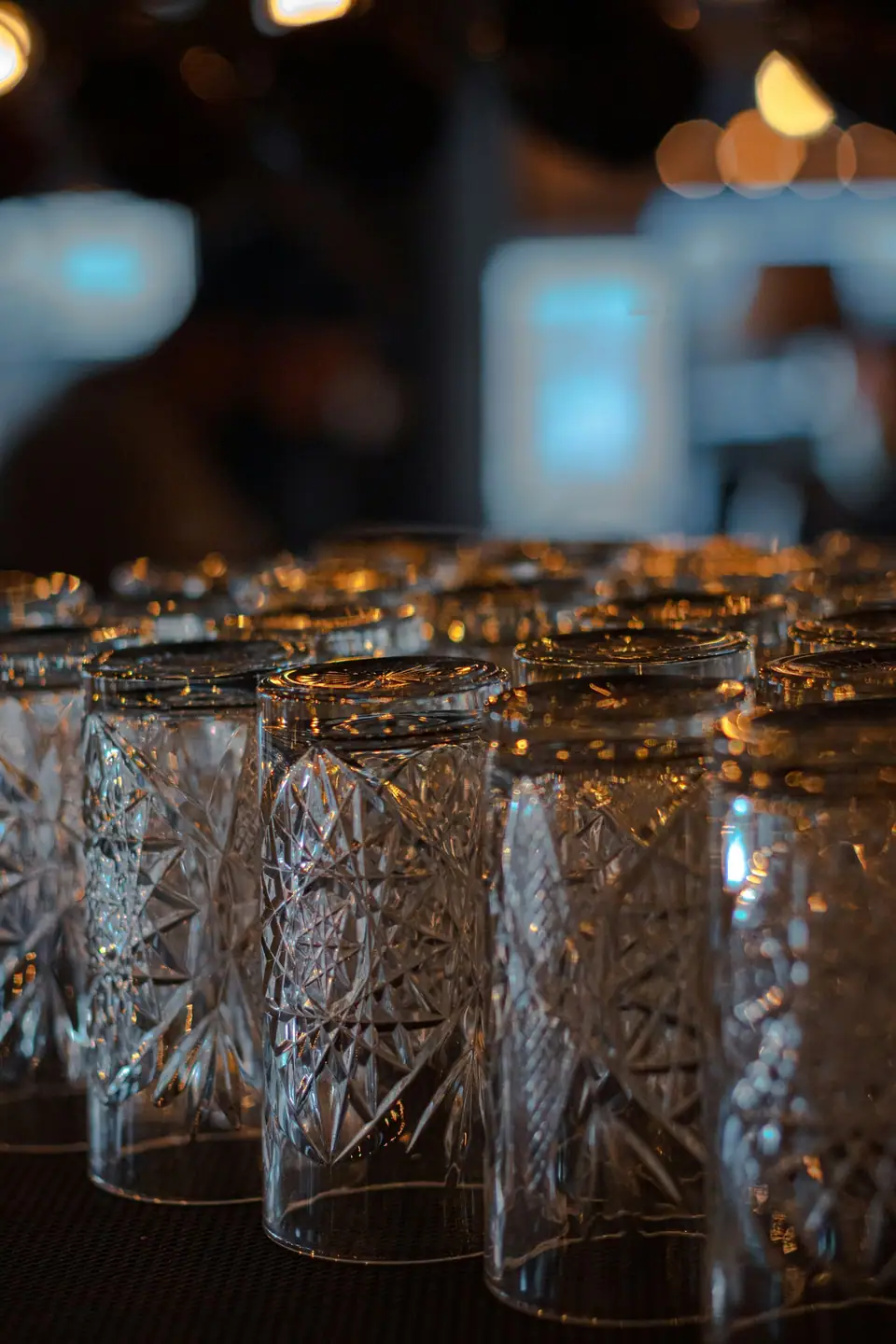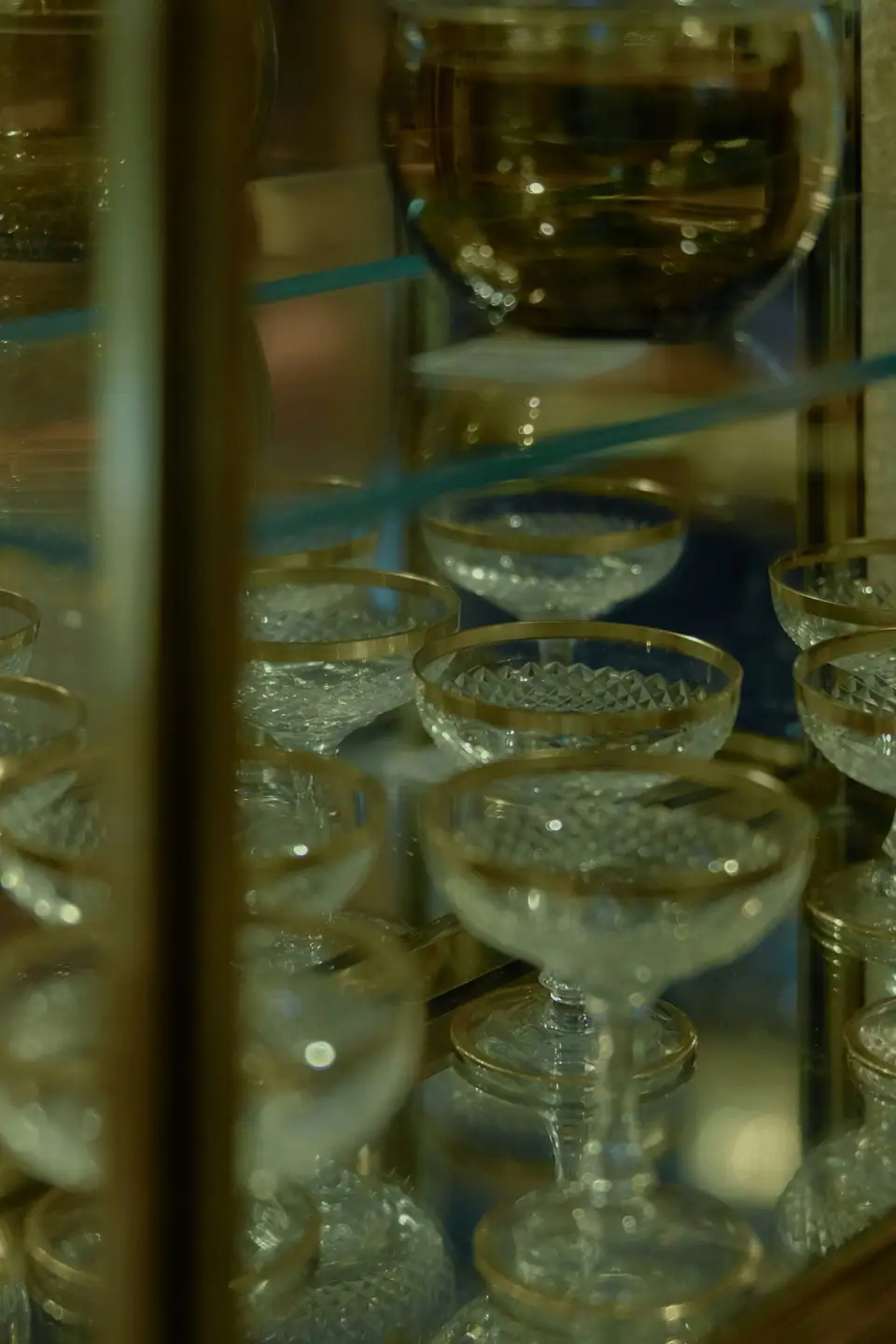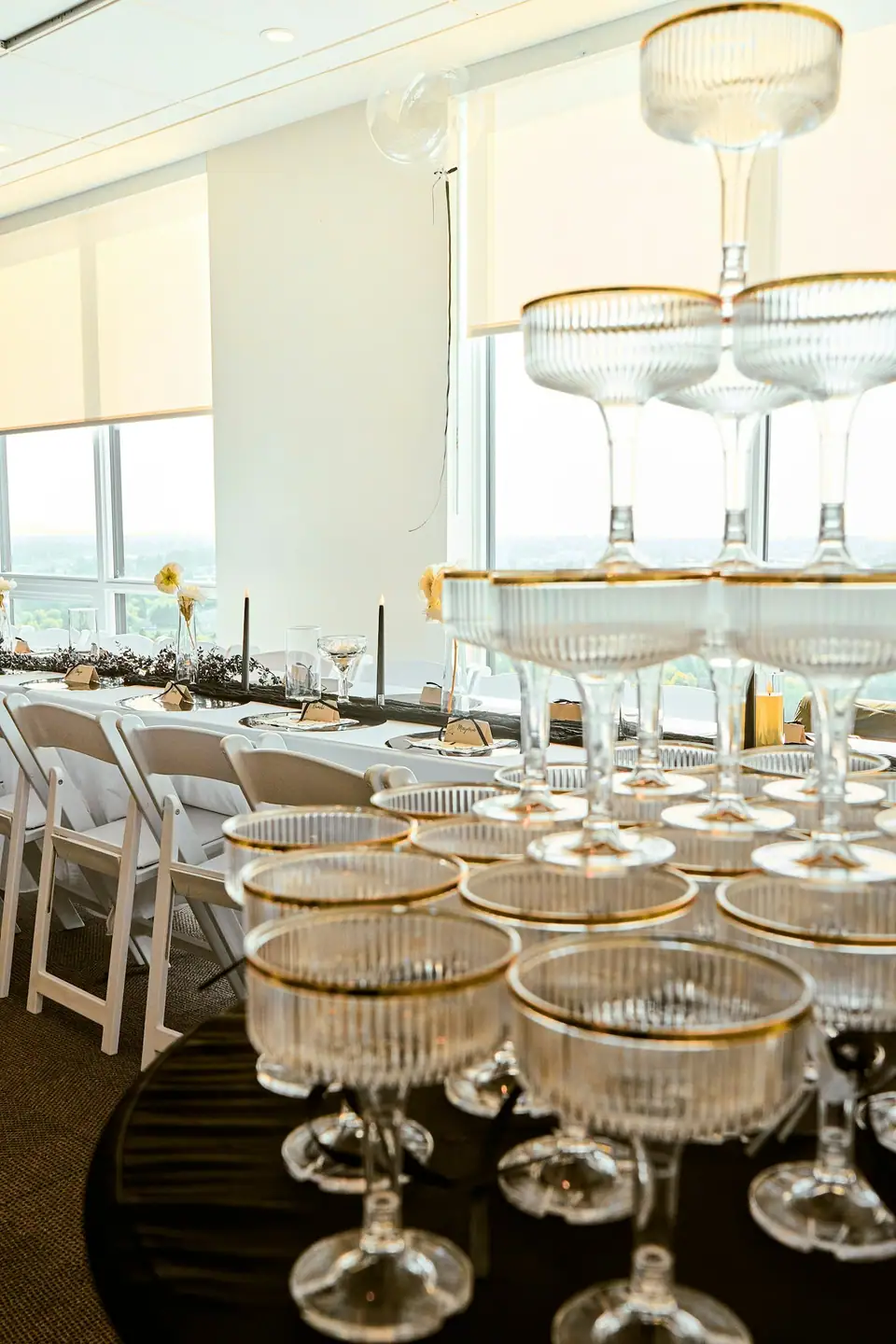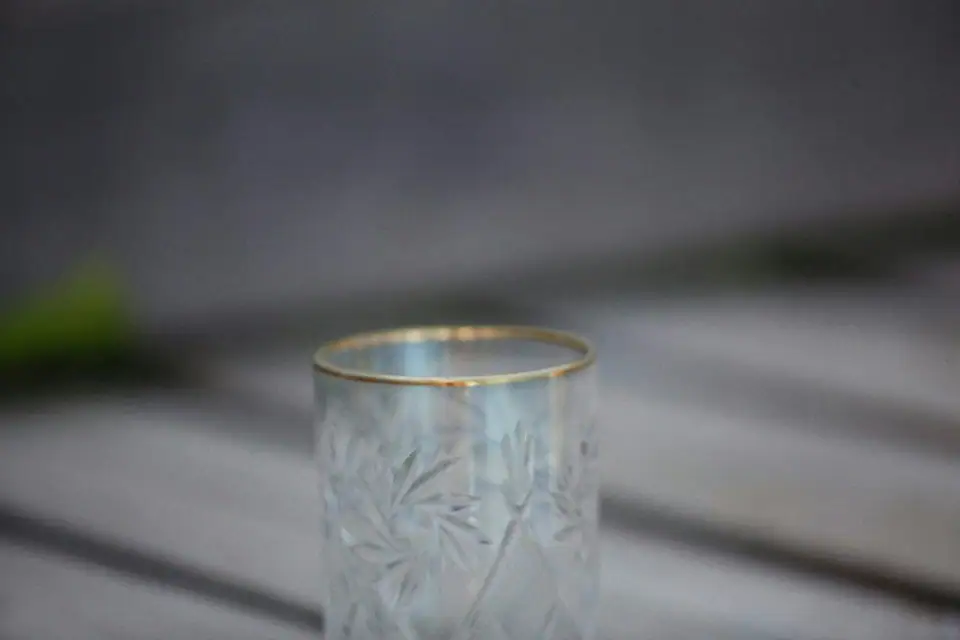
Dorothy C. Thorpe (1901 to 1989) ran a Glendale, California, studio that decorated bought-in glass with sandblasted designs and sterling silver bands. Her best-known barware is the 1950s Roly-Poly tumbler with a silver rim band. Genuine pieces may carry her sandblasted mark, a large T with a smaller D, but unsigned look-alikes are common.
This guide is part of our hub on mid-century barware designers.
Who was Dorothy Thorpe?
The Art Institute of Chicago, which holds her work, records her as Dorothy C. Thorpe, American, 1901 to 1989, of Dorothy C. Thorpe, Inc., Glendale, California. Cooper Hewitt’s collection data says she was born in Salt Lake City and began working during the Depression, and the Journal of Antiques and Collectibles gives the same birthplace and year.
She was a decorator rather than a glassmaker. The Journal of Antiques and Collectibles says she bought simple blank glassware, mostly crystal, from American and European manufacturers, and the Glass Encyclopedia notes that her designs appear on Heisey and Cambridge glass among others. She then decorated it: the Glass Encyclopedia describes sandblasted or deeply etched designs and silver overlay, and Cooper Hewitt adds lucite, silver and frosting techniques.
Her designs reached beyond glass. Te Toi Uku, the Crown Lynn museum in New Zealand, says that Crown Lynn Potteries began producing her tableware commercially in 1965.
What are Dorothy Thorpe Roly-Poly glasses?
The Journal of Antiques and Collectibles describes her 1950s Roly-Poly tumbler collection, each glass with a sterling silver overlay band around the top, and notes that competitors copied it. That is the piece most buyers mean by “Dorothy Thorpe glasses”, and the one most often misattributed.
Dorothy Thorpe glassware
Live listings, shown by eBay
Opens eBay in a new tab. Check condition, seller feedback and returns.
How is Dorothy Thorpe glass marked?
The Glass Encyclopedia describes her trademark as a large printed T in the center with a smaller stylized D on one side and the same image reversed on the other. The Journal of Antiques and Collectibles describes a small capital D next to a larger capital T, sandblasted into the glass, and adds that not every piece carries it. Both mention paper labels, which were often lost.
| What you see | What it suggests |
|---|---|
| Sandblasted T with a smaller D | Her mark; compare it with a documented example |
| Paper label naming her studio | Strong evidence, if it is original to the glass |
| Wide sterling band, no mark | Possibly hers; attribution rests on style alone |
| Narrow silver or faded “mercury” band, no mark | More likely another maker, according to The Hour Shop |
How do you tell real Thorpe silver bands from look-alikes?
Attribution is the main risk. The Hour Shop, a vintage barware dealer, says many silver-rim pieces found today carry no signature or label, and that glassware companies produced glasses in her style without her signature. The Journal of Antiques and Collectibles also notes that unmarked pieces are confused with similar work by other makers.
The Hour Shop attributes to Thorpe only her wide-band sterling overlay pieces, and suggests that narrower silver or mercury bands, and mercury glass that fades into the glass, were likely made by other companies. Without a mark or label, describe a glass as “in the style of” Thorpe.
How should you clean silver-banded glass?
Safety
On a genuine piece the band is sterling silver, so it tarnishes. The Canadian Conservation Institute explains that tarnish is mainly black silver sulfide, that polishes remove silver along with the tarnish and leave a pattern of fine scratches, and that the salts and oils on skin can mark silver. Clean the glass by hand with a soft damp cloth rather than a long soak, dry it straight away, hold it by the base rather than the band, and polish rarely, if at all.
Our guide to caring for vintage glassware covers glass cleaning in general, and sterling vs silver plate hallmarks explains silver standards on other barware.
Buying Thorpe glasses
- Ask for the mark. A close photo of the base or side mark, or the label, comes first.
- Check the band. Look for lifting edges, wear and heavy tarnish on the silver.
- Match the set. Bands should be the same width and finish on every glass.
For glasses of the same shape from other makers, see vintage whiskey glasses and decanters, and for other designers of the period, Georges Briard barware and Culver barware.
Vintage roly poly and old fashioned glasses
Live listings, shown by eBay
Opens eBay in a new tab. Check condition, seller feedback and returns.
Questions collectors ask
Are all silver-rim glasses Dorothy Thorpe?
No. Dealers and collector writers agree that many unsigned silver-band glasses were made in her style by other companies. Look for her sandblasted T and D mark or a paper label, and treat unmarked glasses as attributed at best.
What are Dorothy Thorpe Roly-Poly glasses?
Rounded tumblers from her 1950s Roly-Poly collection, each with a sterling silver overlay band around the top, according to the Journal of Antiques and Collectibles. Dorothy Thorpe roly poly glasses are among her most listed pieces.
How do I clean the silver band on Dorothy Thorpe glasses?
Gently, by hand. The Canadian Conservation Institute warns that silver polishes remove silver along with the tarnish and leave fine scratches, and that skin oils can mark silver, so handle the band as little as possible and avoid the dishwasher.
Did Dorothy Thorpe design dinnerware?
Yes. Te Toi Uku, the Crown Lynn museum in New Zealand, says Crown Lynn began producing a range of her tableware in 1965.
Sources
- Dorothy C. Thorpe, bowl (1990.108)Art Institute of Chicago
- Influencing Glass HistoryJournal of Antiques and Collectibles
- Dorothy Thorpe GlassGlass Encyclopedia
- Dorothy C. Thorpe (collection data)Cooper Hewitt, Smithsonian Design Museum
- Dorothy ThorpeTe Toi Uku, Crown Lynn and Clayworks Museum
- Who is Dorothy Thorpe and What Glassware Can Be Attributed to Her?The Hour Shop
- Silver: Care and Tarnish Removal (CCI Notes 9/7)Canadian Conservation Institute
- Historic Housekeeping: Glass and CeramicsOhio History Connection
From our guide to Mid-Century Barware Designers: Culver, Briard, Thorpe and Fred Press.